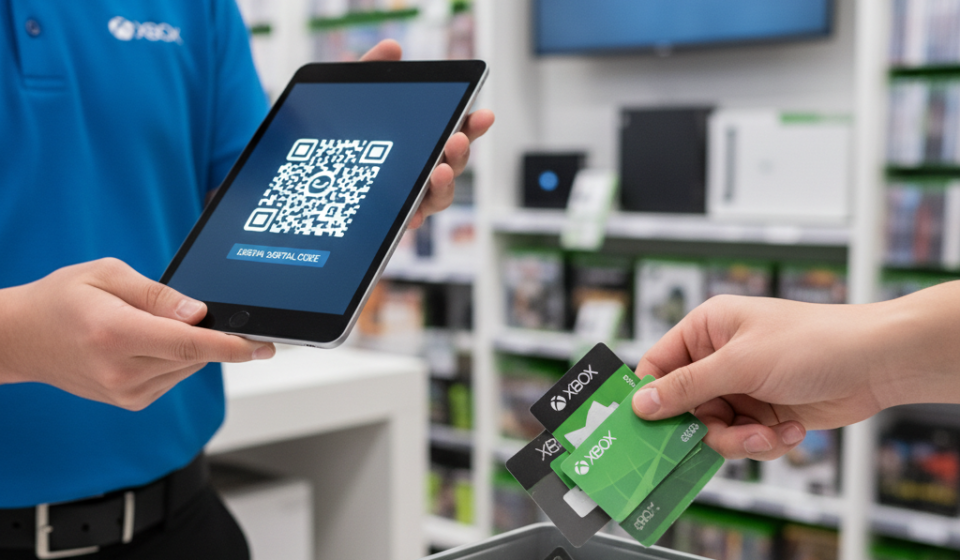

A Quiet Revolution on the Retail Racks
The rows of colorful plastic gift cards hanging near supermarket checkout lanes are starting to look a lot emptier. Major retailers are quietly changing how they sell gaming currency. Specifically, physical Xbox gift cards are beginning to disappear from store shelves. In their place, stores are rolling out a system that prints digital-only codes directly onto customer receipts, or emails them straight to an inbox.
It is a massive operational shift driven by two main goals: saving money and saving the planet. For years, environmental advocates have pointed out the sheer volume of plastic waste generated by single-use gift cards. Most of these cards are made from polyvinyl chloride (PVC), a notoriously difficult plastic to recycle. Millions of them end up in landfills every year.
The Environmental and Financial Costs
The environmental cost of plastic gift cards has been a quiet crisis in retail for over two decades. Switching to digital delivery or printing codes on eco-friendly paper is a simple step. It eliminates production, shipping, and disposal costs in one fell swoop. Retailers no longer have to worry about ordering physical stock months in advance or paying to transport heavy boxes of plastic cards across the country.
But sustainability isn’t the only force at play here. Security is a massive headache for big-box stores. Gift card scamming has turned into a highly sophisticated criminal enterprise. Scammers frequently visit retail racks to copy bar codes, scratch off security strips to steal PINs, and then wait for an unsuspecting customer to buy and activate the compromised card. Once activated, the criminals drain the funds instantly.
Stopping Fraud at the Register
Digital-only codes printed at the register make this specific scam impossible. There is nothing to steal from the shelf. A unique 25-character Xbox code is generated only at the moment of purchase, printed on demand, and handed directly to the paying customer. Security is guaranteed because the code does not exist in the physical world until the transaction is complete.

Retail workers are already noticing the transition. In many stores, the once-crowded gift card trees are being replaced with smaller, sleek cardboard displays that explain the new digital process. Employees are spending less time organizing messy shelves and more time explaining the new system to curious shoppers.
How Consumers Are Adapting
For older shoppers, the transition has required a bit of hand-holding. Buying a gift for a grandchild used to be as simple as grabbing a physical card off a rack. Now, cashiers are having to explain that the code is on the paper slip they are handed at the end of the transaction. To prevent people from accidentally throwing these codes away with their regular trash, stores are adding bold warnings to the top of receipts.
To make this transition smoother, retailers are also upgrading their checkout technology. Many are switching to eco-friendly, phenol-free thermal paper receipts. Traditional thermal receipts contain BPA or BPS, chemicals that make them unrecyclable. The new wave of paper receipts uses natural plant-based coatings, making them safe to throw in the blue bin alongside regular cardboard and paper.
The Future of Gaming Retail
Microsoft is leading this charge, but industry insiders expect other major gaming giants to follow. Nintendo and Sony still offer physical cards, but their shelf presence has also begun to shrink in favor of digital distribution terminals. For gamers, the experience remains largely unchanged. Redemptions on the Xbox network work exactly the same way, whether the code was scratched off a piece of plastic or read off a paper slip.
Still, the shift does change the dynamics of gift-giving. A paper receipt lacks the visual appeal of a glossy plastic card featuring video game heroes. To address this, some retailers are testing printable card templates that customers can download at home, allowing them to slip the printed digital code into a neat, presentation-friendly envelope. Retail is changing. It is becoming leaner, more digital, and far less wasteful. The death of the plastic gift card might feel like the loss of a minor convenience, but for the environment, it is a significant step forward.